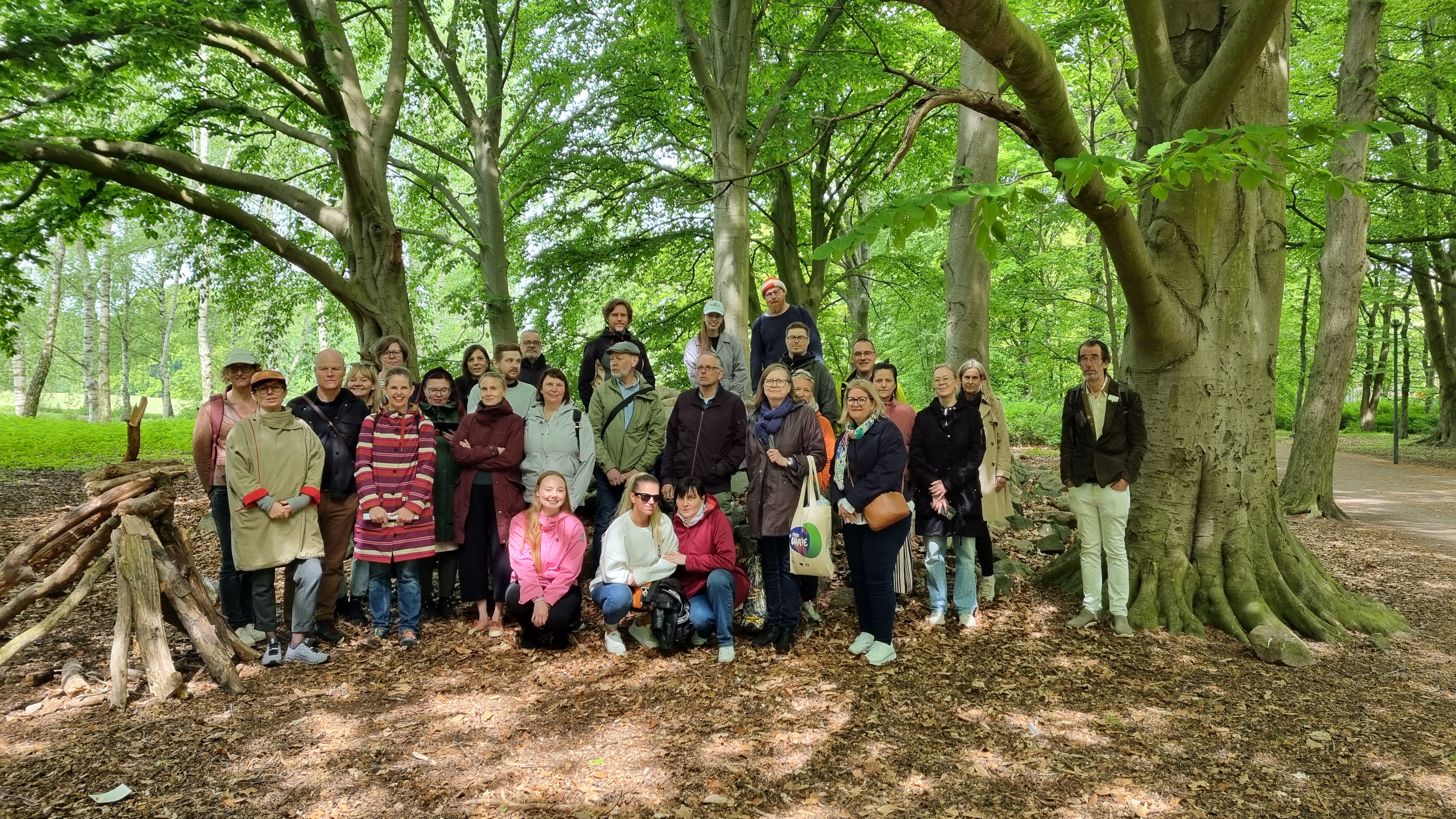
The Urban Biodiversity Parks project pilots the concept of a biodiversity park as a tool for urban ecological restoration and regeneration. The aim is to establish a 20-hectare biodiversity park that provides a platform for testing various nature management activities, focusing on local species and habitats, while also serving as a space for community engagement and experiential learning. Europe’s first biodiversity park will be established in the Skanssi neighborhood by the City of Turku. To gain inspiration and avoid reinventing the wheel, Urban Biodiversity Parks organized a site visit to Malmö, which has ambitious goals to become a city with rich nature and healthy ecosystems. Malmö is one of the transfer partners in the project, alongside Kosice (Slovakia) and Neapoli-Sykies (Greece), aiming to replicate Turku’s solutions in their own cities. The learning process in the project is not, however, only one-way, as Turku also seeks inspiration for its implementation from the transfer cities.
During the trip, a group of around 20 enthusiastic project experts visited several locations in Malmö. Ekostaden Augustenborg has become a global benchmark for sustainable urban renewal, with a strong focus on biodiversity, stormwater management, and climate adaptation. This area is where many new solutions are first piloted and then scaled up elsewhere. Based on experiences in Malmö, it may be wise to place a bit more emphasis on social values over biodiversity values in the initial rounds of pilots to ensure social acceptance and successful implementation. Cooperation with local communities is key to success.
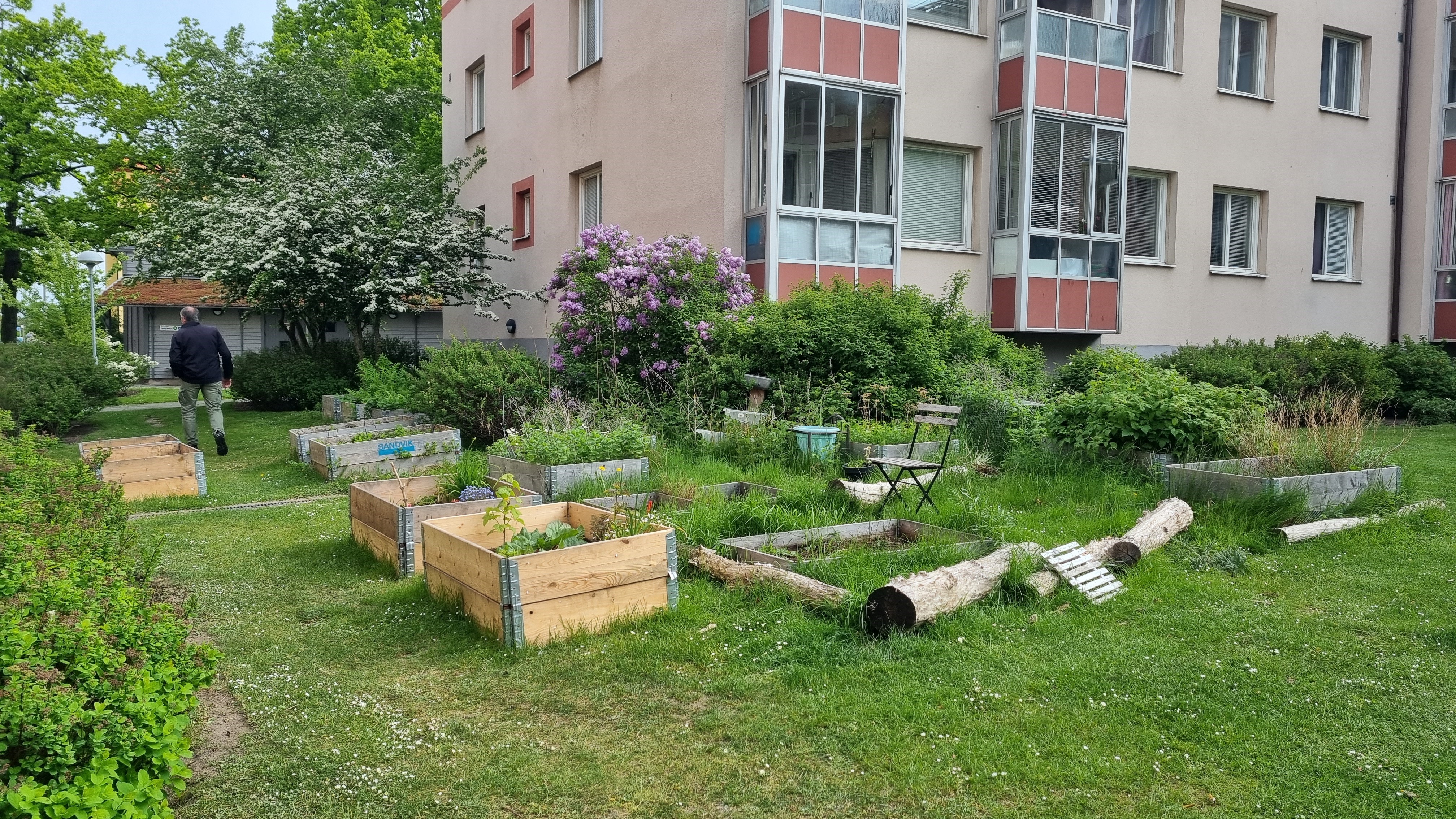
Community garden flourish and new micro-forest are being developed by the Augustenborg’s property owner MKB.
Segepark, a former hospital site, has been the focus of major redevelopment and urban densification in recent years, with an emphasis on sustainability and the sharing economy. The development of the area has been based on the 3/30/300 model, which means that everyone should be able to see at least three trees from their home, all neighborhoods should have at least 30% tree canopy coverage, and everyone should be within 300 meters of the nearest park or green space.
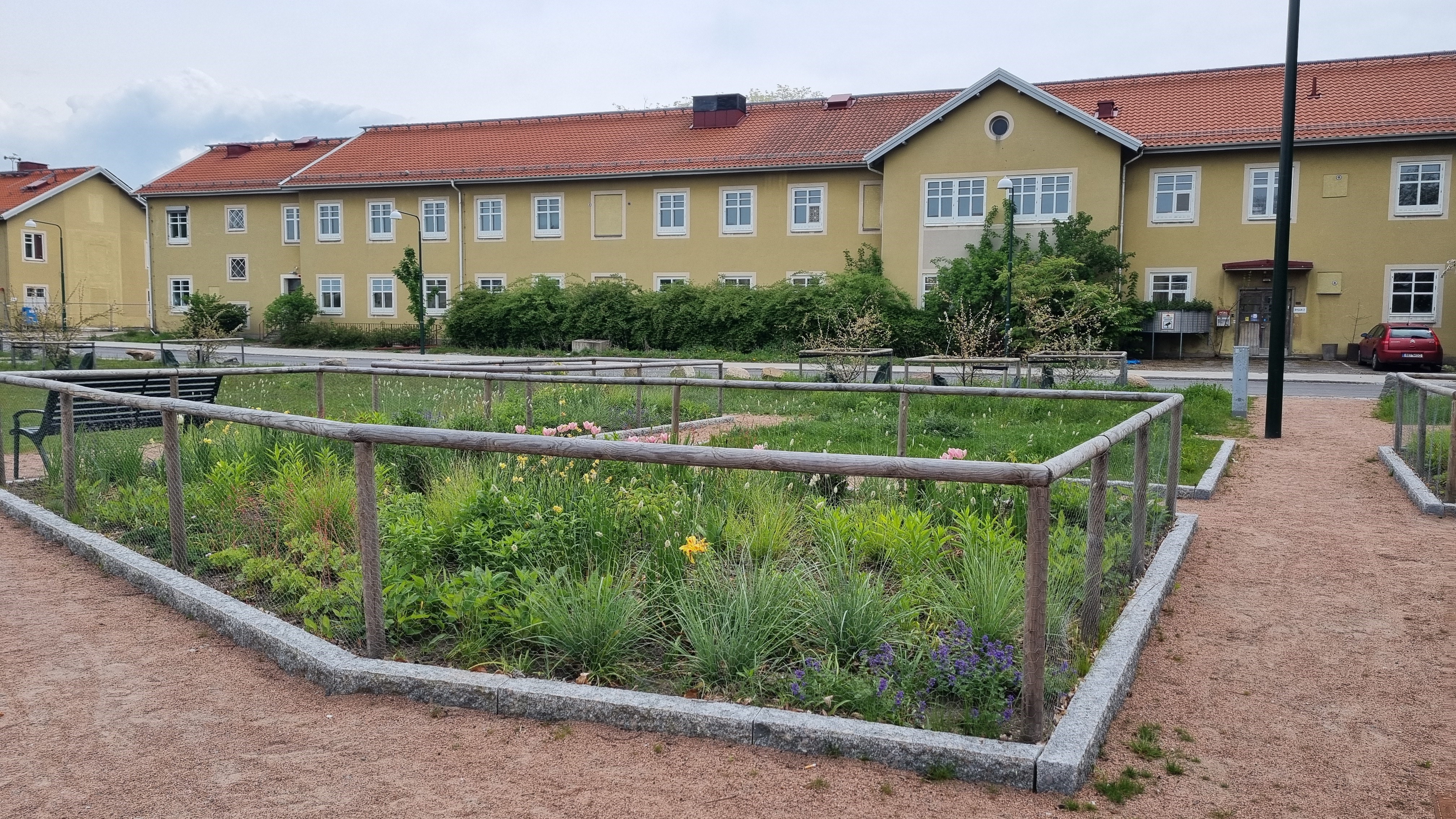
Community gardens and community food production has been part of the Segepark development.
A clear message from Malmö was that in order to strengthen biodiversity, it should be integrated into every step of the urban development process, from planning to construction and maintenance. To ensure this, we need to rethink how we work and cooperate more across sectors. Biodiversity is not just a concern for ecologists and biologists but should be a priority for everyone involved in the process.
Our host, Senior Environmental Strategist Per-Arne Nilsson, highlighted:
"Sustainable living should not be just for rich people.”
We need to find new ways to better engage with local communities and increase their awareness and understanding of biodiversity and the value of nature. Segepark is Malmö’s pilot area in the Urban Biodiversity Park project, where the city will pilot new approaches, including new cooperation models with local libraries to develop them as places for local communities to learn about nature and biodiversity.
One of the most impressive sites to visit was Limhamn’s lime quarry – an old site that has been used for industrial limestone mining for over 100 years. After long debates about its possible new use, it was decided that nature could take over the site. Today, the area has rich natural life with over 2,000 different animal and plant species. Despite the potential recreational values, Malmö has decided in this case that nature and other species have priority, and access to the site has been restricted for humans.
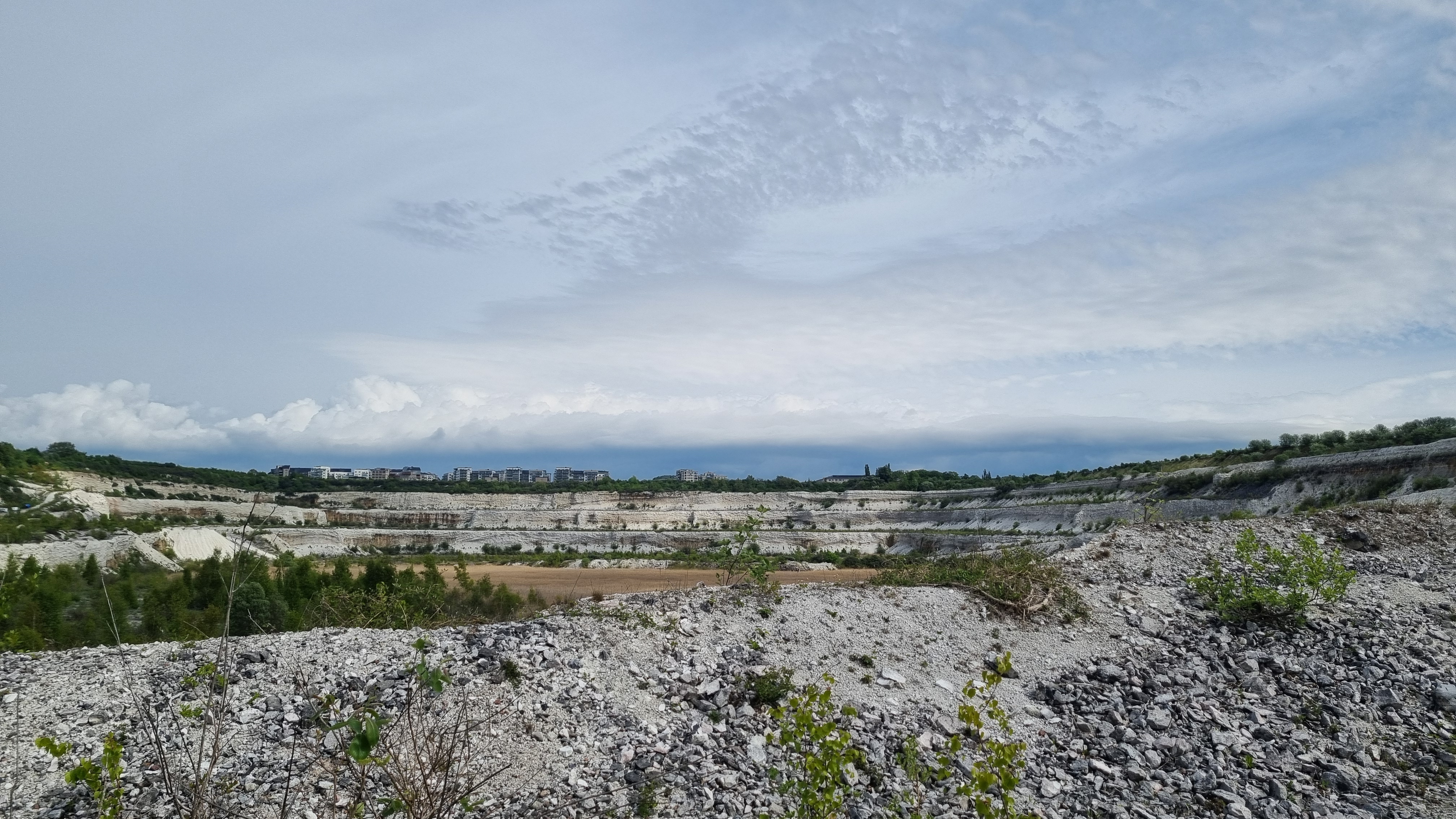
The site was used for mining from mid of the 19th century until the 1990s.
This site visit was a good reminder of how important cross-border cooperation is in developing solutions that help make our cities greener and combat biodiversity loss.
If you are interested in learning more about the Urban Biodiversity Parks project and seeing some of Malmö’s solutions in practice, we welcome you to the UBC Commission meeting in Malmö that will take place October 1-3rd 2025. More information about the event: UBC Sustainable Cities Commission meeting with the Climate Budget Summit | UBC Sustainable Cities Commission.
You can also watch the UBC TALKS about Urban Biodiversity Parks as a method for actively increasing biodiversity | UBC Sustainable Cities Commission.
Author: Maija Rusanen, Senior Advisor in the City of Turku and UBC Sustainable Cities Commission, who coordinates the transfer activities in the project.