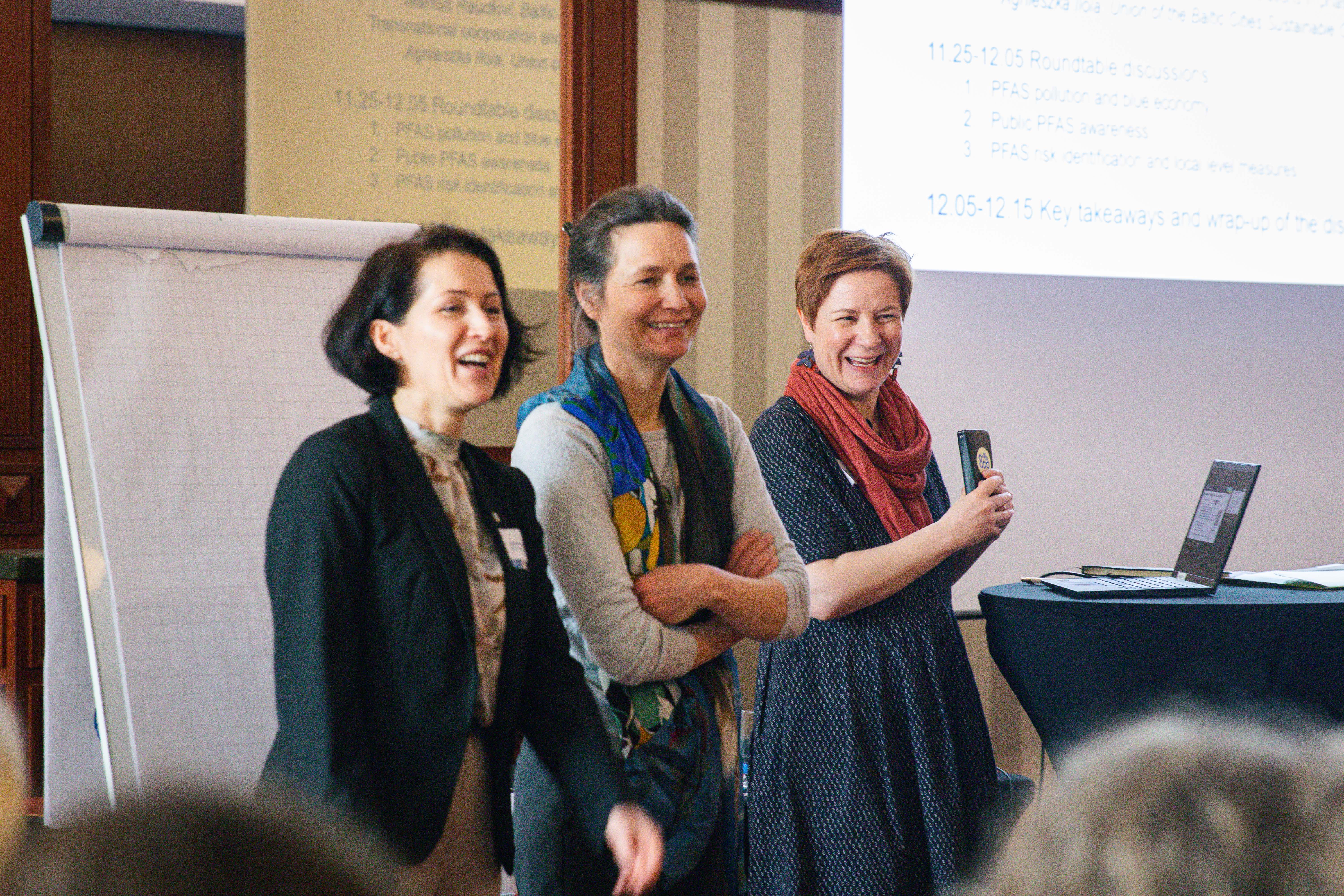
PFAS workshop at the Mission Ocean's macroregional arena
The EU Mission “Restore our Ocean and Waters” organized the fourth gathering of ca. 300 experts from the Baltic Sea and North Sea lighthouse basins on 28-29 April in Sopot, Poland. The Mission Arenas have focused particularly on blue economy, i.e. the sustainable use of sea resources for economic growth and jobs, while preserving the health of sea ecosystem. The topics also covered security of maritime infrastructure to shipping and ports, and marine protection and restoration.
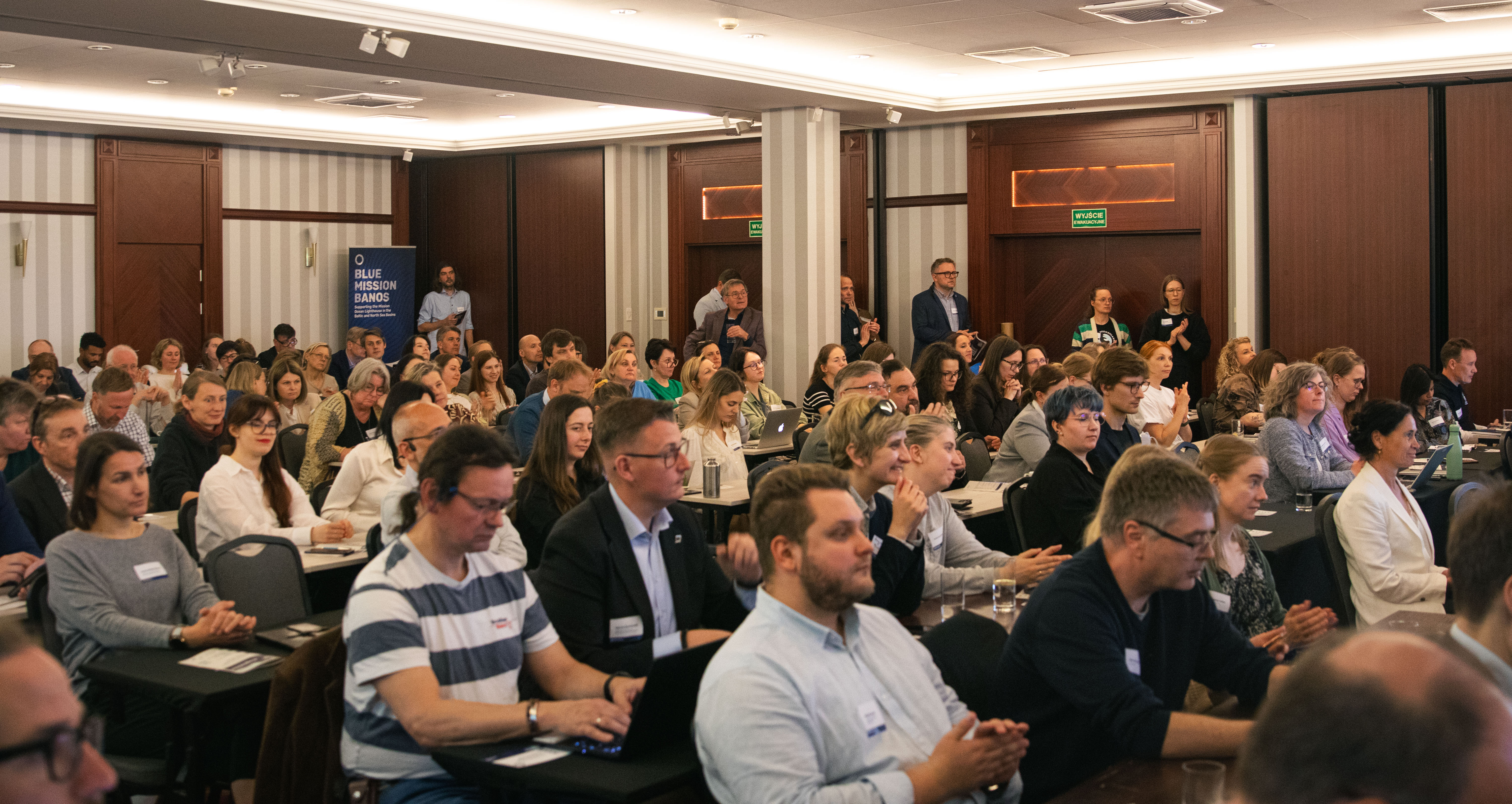
On the photo: Participants of the Mission Arena in Sopot. Photo by the Blue Mission Banos Arena organisers.
The EMPEREST project, led by UBC Sustainable Cities Commission, organized a workshop “Tackling PFAS pollution in water” at this Arena, with support from experts in HELCOM and Turku University of Applied Sciences, to raise awareness of the risks caused by PFAS compounds and their impact on human health and the environment, and to highlight the importance of data collection and monitoring of PFAS pollution.
Head of UBC SCC Secretariat Agnieszka Ilola introduced to the workshop participants the importance of transnational cooperation and presented the EMPEREST solutions in phasing out PFAS. The monitoring recommendations, PFAS risk-assessment tool, technology pilots for wastewater treatment and the training package materials EMPEREST produces will be useful tools in the continuous work of eliminating PFAS from the water cycle.
In the group discussions, workshop participants from research institutions, regional authorities and private companies discussed public PFAS awareness, PFAS risk identification at local level, and PFAS pollution in blue economy. Several concerns were voiced if authorities are doing enough to tackle the PFAS problem; there seems to be a gap between scientific knowledge of the harmfulness of PFAS and the actions to phase out PFAS. PFAS risk identification at local level is a critical first step in managing PFAS contamination, enabling cities to understand potential exposure pathways and prioritize appropriate mitigation measures. Participants agreed that investing in local capacity building and awareness raising, such as training initiatives and improved access to technical expertise would greatly support this initial phase.
In the closing of the Sopot conference, all 300 participants were invited to vote for the most important actions to recommend as priorities for more clean and prosperous future of the Baltic Sea and North Sea. From the category of marine protection and restoration, a total of 9 action points were proposed through 3 thematic workshops, and the point suggested by EMPEREST was successfully voted for and included into the action list:
“Tackling PFAS problem is essential for a sustainable blue economy and a safe circular economy. Since not all sources of PFAS are known, it is better to prevent their use as a group through EU-level legislation. The planned “PFAS ban” should apply to all products where safer alternatives are available.”
EMPEREST workshop in Szczecin discussed micropollutants in wastewater with operators and companies
On 12-14 May 2025, EMPEREST launched its fourth workshop in Szczecin, Poland, thus finalising the project’s capacity building series. The workshop “Unlocking innovative solutions and developing capacities in the wastewater sector” hosted by the Water and Sewage Company Ltd. of Szczecin brought together 70 participants from water utilities, companies and universities to confront one of the water sector’s most pressing challenges: the removal of organic micropollutants from wastewater. Under the recast Urban Wastewater Treatment Directive (UWWTD), the event provided a timely platform for discussion, knowledge sharing, and innovation. From the UBC SCC side, Lotta Lehti and Mariia Andreeva co-organised and co-moderated the workshop.
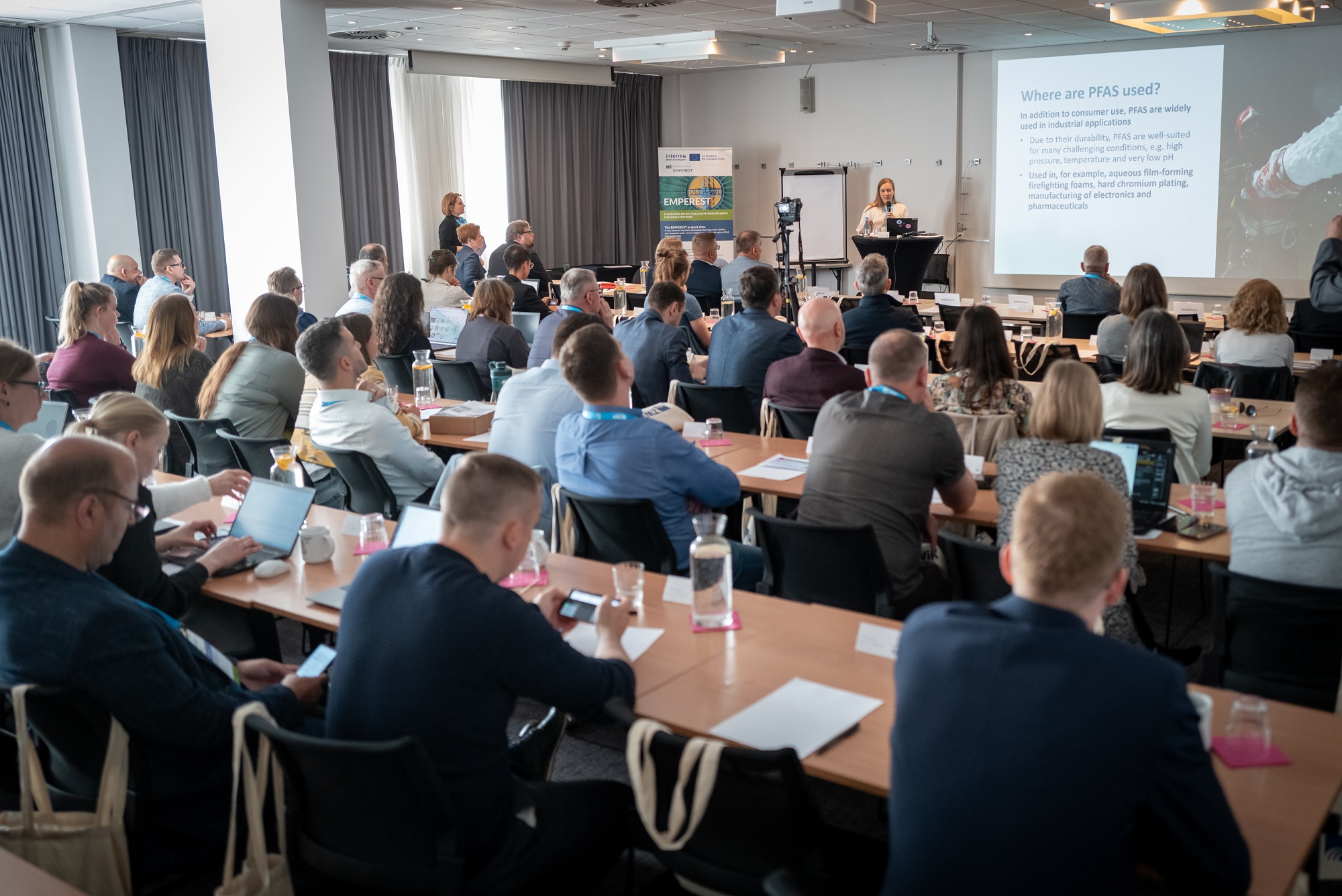
On the photo: participants of the EMPEREST 4th workshop in Szczecin. Photo by ZWiK Szczecin.
Participants explored advanced wastewater treatment technologies, with a strong focus on tackling PFAS, often called “forever chemicals”. Presentations highlighted the evolving landscape of quaternary treatment, shared insights from EMPEREST pilot studies, and discussed various intricacies of treating organic micropollutants, e.g. sampling and analysis.
The workshop concluded with an engaging World Café of Solutions boosting cross-sectoral dialogue. Attendees rotated between four stations, each addressing a crucial side of the complex topic: implementing the Urban Wastewater Treatment Directive, discussing how can the polluter-pays principle work in practice, identifying PFAS hotspots in cities, and exchanging effective experiences of raising public awareness.
Participants shared best practices from their cities and discussed various concerns, for example, how to define the risk areas for the recast UWWTD, or how to reach energy neutrality at wastewater treatment plants. At the polluter-pays principle station, groups could vote if they thought that the proposed EU regulations were already clear enough, or further adjustments (simplification of procedures or clarification of measures) were needed to enable the implementation on the ground. At the table focusing on PFAS hotspots, participants could play an interactive game and through that get to know more about potential PFAS sources both in their cities and even in their own households. Exchanging opinions in public awareness campaigns, all international experts emphasized the importance of starting education from the young age, to raise a generation of sustainability-conscious citizens.
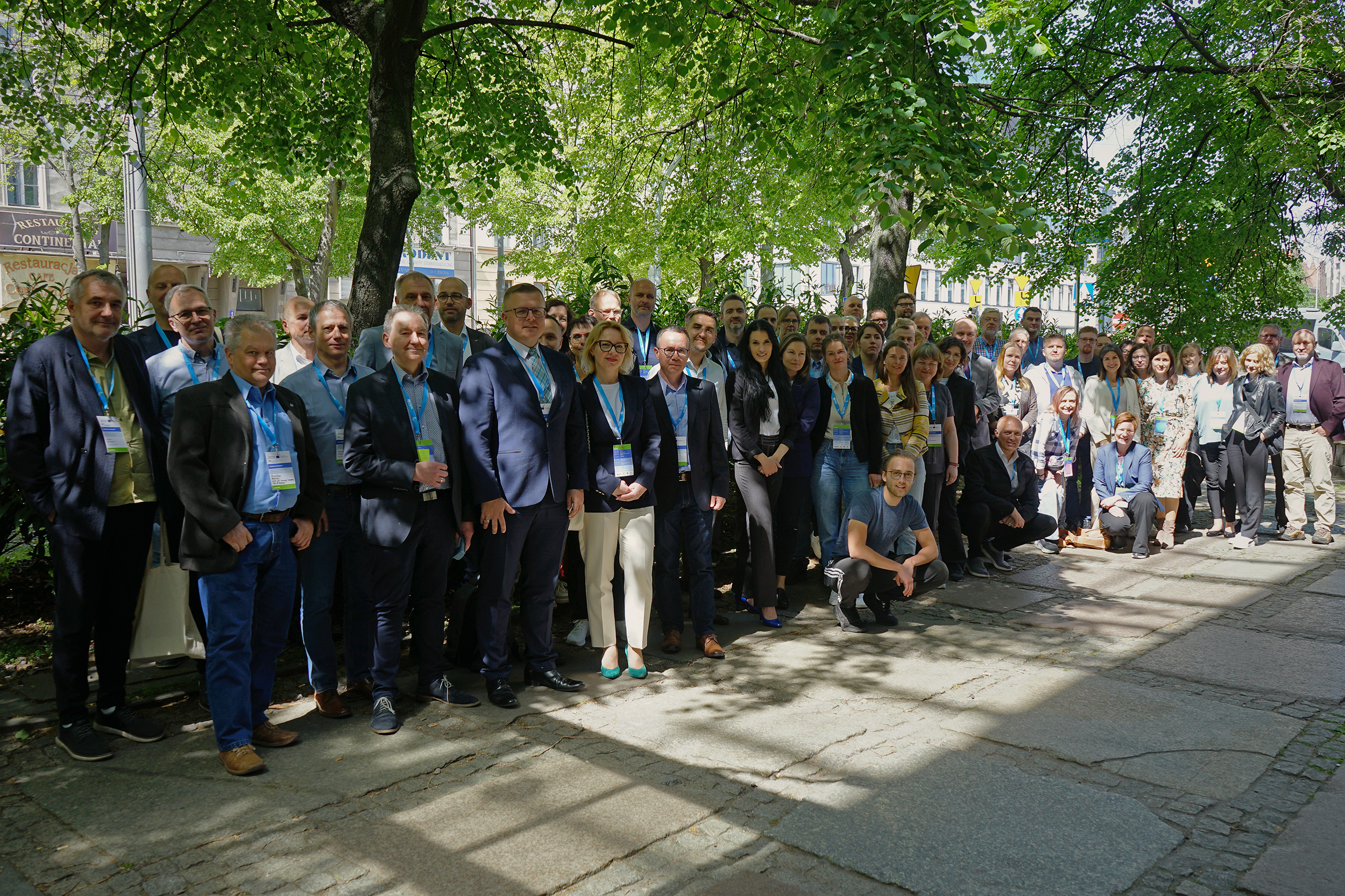
On the photo: participants of the EMPEREST 4th workshop in Szczecin. Photo by Mariia Andreeva.
This workshop has further advanced the conversation around wastewater treatment in Poland and the Baltic Sea Region, and planted many seeds for fruitful partnerships to create a safer urban water future!
At the closing of the workshop, all participants have been invited to save the date and join the final conference of the EMPEREST project coming on 19-20 November 2025 in Berlin - and we invite you to do the same! Agenda and registration for this key European water event of the autumn 2025 will be released very soon.