RESIST project, funded by the Horizon Europe programme, is one of the first demonstration initiatives for the EU Mission on Climate Adaptation. In Turku and the region of Southwest Finland, the project focuses on adaptation to extreme water-related conditions, such as droughts and floods. The goal is to increase preparedness for these kinds of extreme situations by developing regional cooperation, improving planning processes, and implementing nature-based solutions.
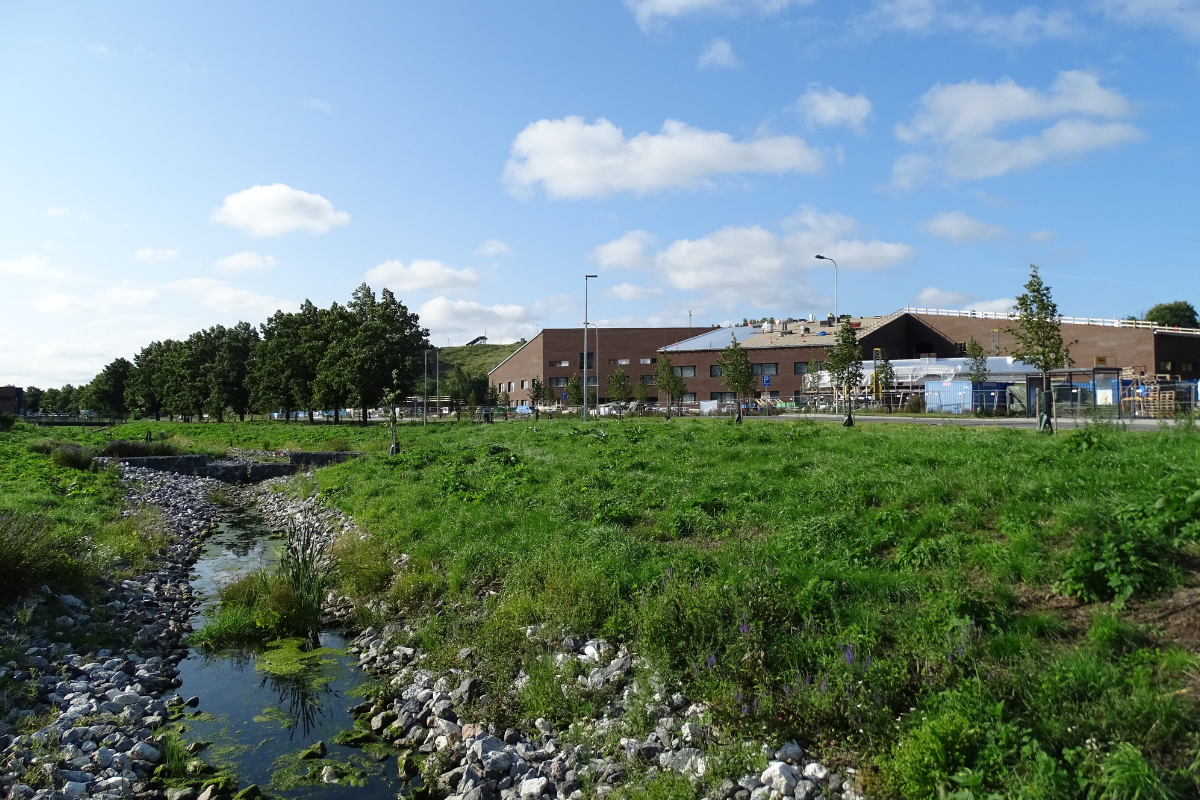
In Turku, the focus is on renovating and upgrading the stormwater infrastructure through a nature-based solutions lens. New planning methods are demonstrated in two areas of the city: Rauvolanlahti Bay and the Oriketo industrial zone. In these areas, RESIST is piloting watershed-level stormwater planning and management, and making a cost-benefit analysis of nature-based solutions that could be implemented on city-owned land. In addition to this, the city is working together with its local project partners to engage citizens in the city-wide implementation of nature-based solutions.
On the photo: RESIST pilot site in the Rauvolanlahti Bay. Photo by Minna Kivimäki.
The ultimate goal is to restore the natural water retention in catchment areas where human activity has altered flow routes and reduced the land’s ability to absorb water. By integrating nature-based solutions and elements such as wetlands and restored streams back into urban environments, the capacity of the drainage system is increased. In addition to better drainage, nature-based solutions also strengthen ecosystems and biodiversity in the city.
While the city can do a lot to improve its climate resilience through urban planning, green infrastructure should be added all over the city to achieve wide-reaching impact. To increase the amount of green infrastructure in the city, Turku introduced green efficiency targets for new lots in 2021. As a help for urban planners and developers, the city provides a Blue-Green Factor planning tool, originally developed in iWater project, which can be used to calculate sufficient green efficiency in new lots. In RESIST, the planning tool is developed further and transferred to RESIST partners in Normandy and Eastern-Macedonia and Thrace regions.
A key strength of the project lies in combining research-based knowledge with practical implementation. Bringing together researchers and professionals working in water management ensures that the planned measures are tested, evaluated, and improved based on real-world data.
RESIST is part of a wider strategy at European level: the EU Mission Adaptation to Climate Change. The mission focuses on supporting at least 150 European regions, cities and local authorities by 2030 in their efforts to build resilience against the impacts of climate change. In total, RESIST engages twelve European regions with different socioeconomic profiles to find adaptation solutions to five key climate challenges: floods, droughts, heatwaves, wildfires, and soil erosion.