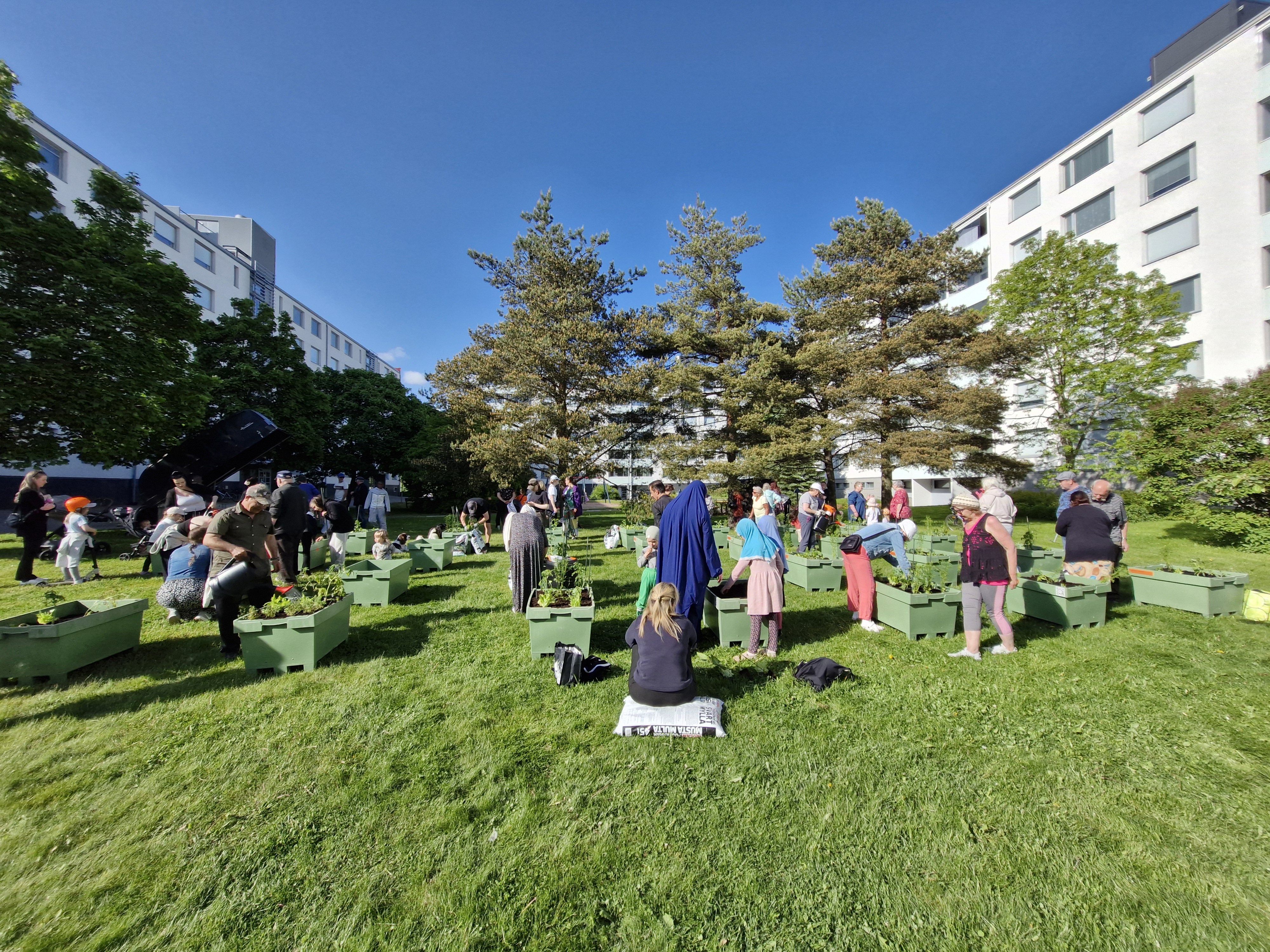
Neighbourhoods as living laboratories
Halinen and Jyrkkälä are ordinary, lived-in suburbs where forests, courtyards and riverbanks are part of daily routines. Before choosing any pilot sites, Turku carried out ecological mapping and resident surveys to understand existing habitats, how people use them and where realistic opportunities for biodiversity improvements exist.
This groundwork revealed both strengths and challenges: multicultural communities, active local actors and rich natural areas, but also concerns about safety, maintenance and overgrown greenery. These insights shaped an inclusion plan that guides participation and ensures pilots respond to local realities.
Pilots designed for long-term use
Instead of quick experiments, Turku selected pilots that can serve neighbourhood needs for years to come. In Halinen, an overgrown forest edge is becoming the Nature Nest – a simple nature-play area co-created with the school, kindergarten and local families. In Jyrkkälä, meadow areas, nature patches and community gardening are being tested as everyday nature destinations in collaboration with the housing company and resident groups.
A central focus is governance: who maintains each site, how tasks fit city routines and what happens when project funding ends. Clear responsibilities and early cooperation with existing organisations are key to making the pilots last.
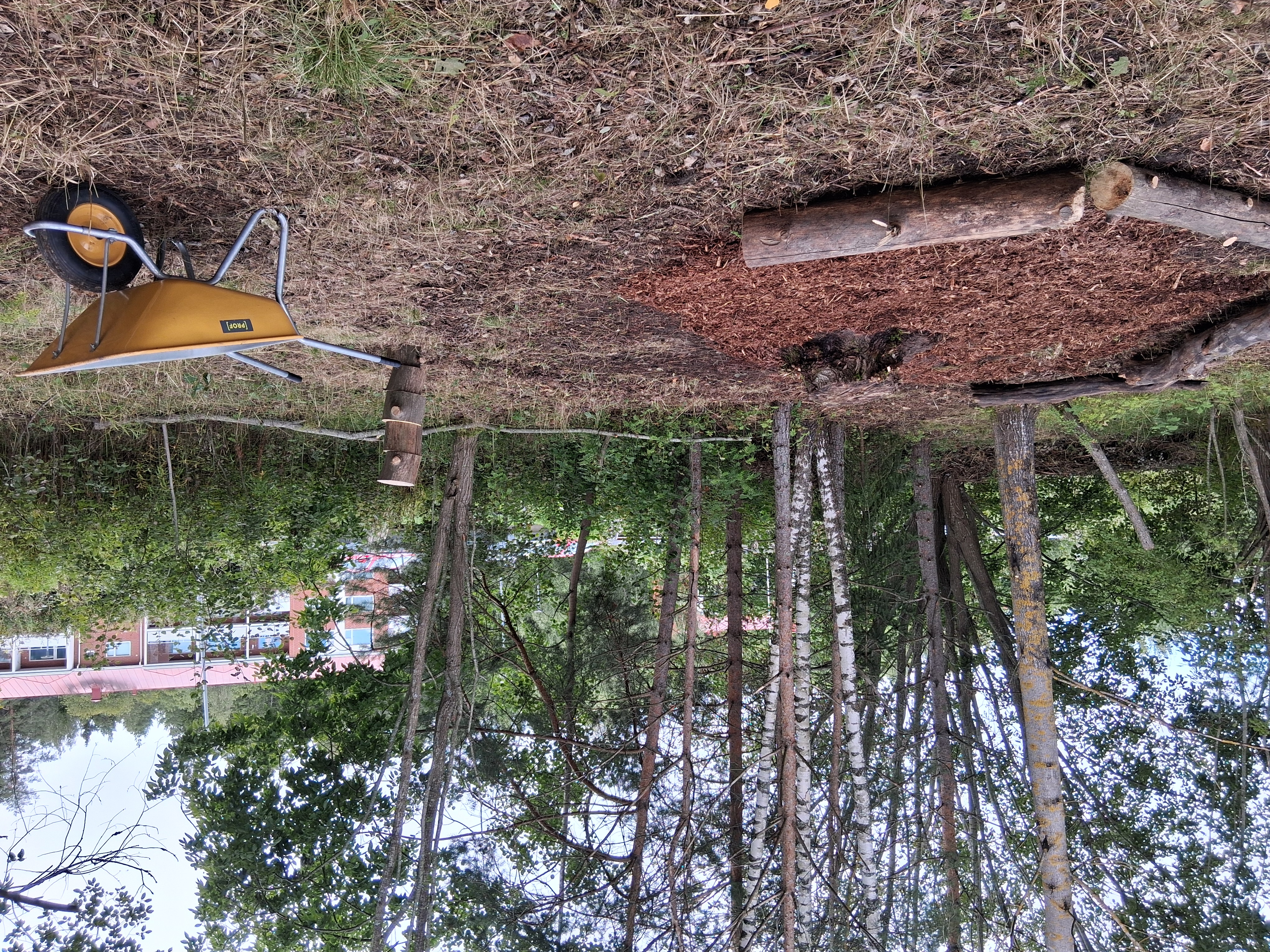
The Halinen Nature Nest. An overgrown forest edge near the school and kindergarten is being turned into a simple nature play and learning area that supports children’s everyday contact with nearby nature, develops their motor and sensory skills, and can be cared for with reasonable effort.
What keeps residents involved
Residents stay engaged when biodiversity connects to daily life. Food growing, berry picking, children’s play, pleasant walking routes and neighbourhood pride all motivate participation more reliably than ecological arguments alone. Visualisation tools like UrbanistAI have also helped residents see and influence future changes, strengthening a sense of ownership.
At the same time, the project recognises barriers – time pressures, language, mistrust – and uses varied participation methods to reach different groups.
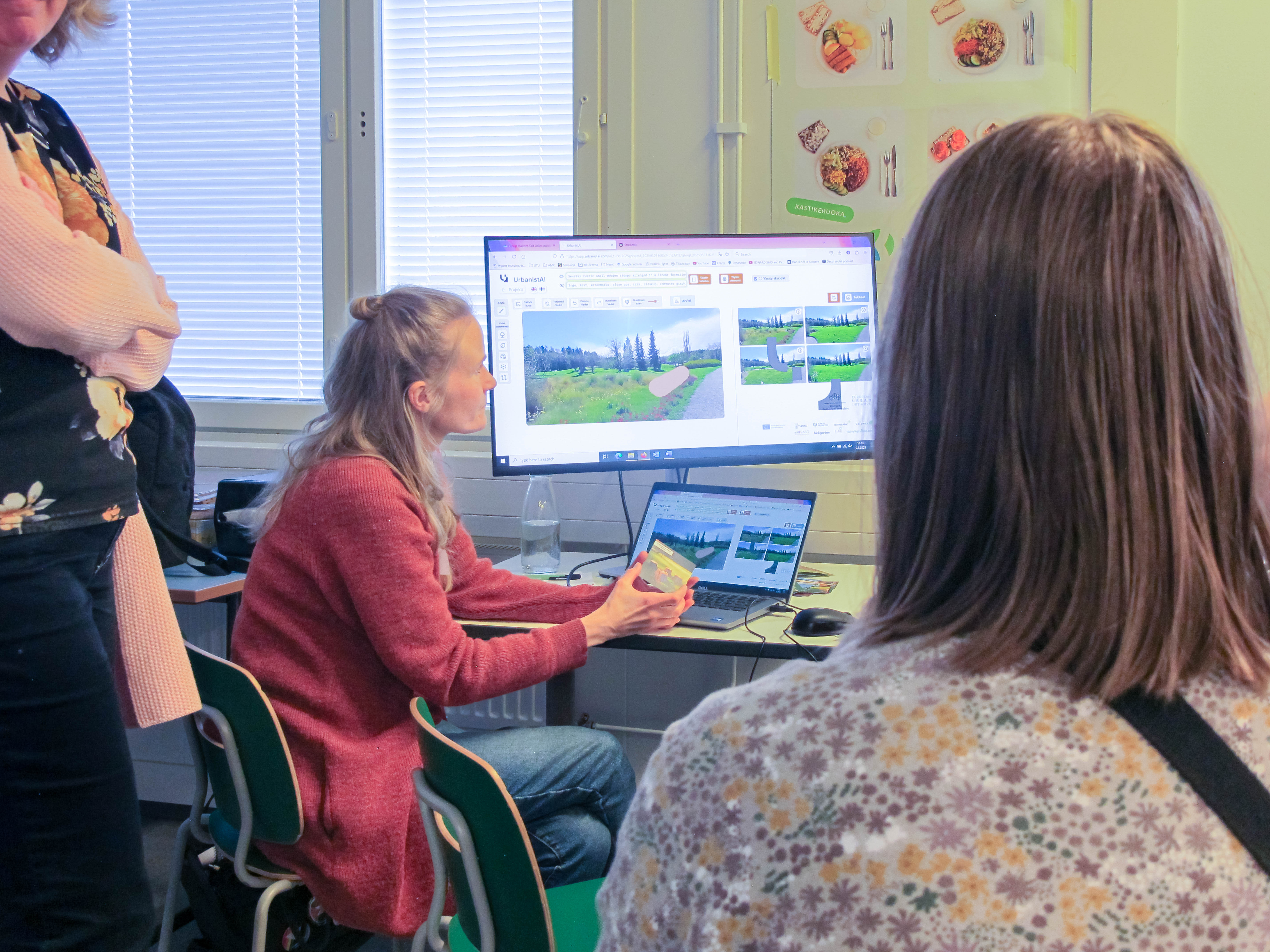
Artificial intelligence served as a good and novel way to help residents participate. Photo Sebastian Jäntti.
Principles emerging from Turku’s experience
Work in Halinen and Jyrkkälä highlights several practical lessons for cities:
- Start from the role of the place, then design the elements.
- Build with actors already active in the neighbourhood.
- Make maintenance part of the concept from day one.
- Connect biodiversity to everyday motivations such as play, food, safety and comfort.
- Be transparent about constraints like land ownership, protection rules and budgets.
- Document and standardise what works so solutions can be reused elsewhere.
Toward a new normal
Turku’s small pilots are shaping more than green spaces – they are changing how the city cooperates internally, communicates with residents and manages urban nature. Project leaders are confident that these models can be replicated both within Turku and in other European cities.
The message is simple: when biodiversity pilots are grounded in real neighbourhoods and everyday life, they can move from temporary experiments to lasting urban practice.
You can read a longer Urban Story that gives more insights on the pilot implementation and involvement of local communities at: From Pilot to Practice: Building Lasting Biodiversity in Turku’s Suburbs | Portico.
Original text in Portico: Klemen Strmsnik