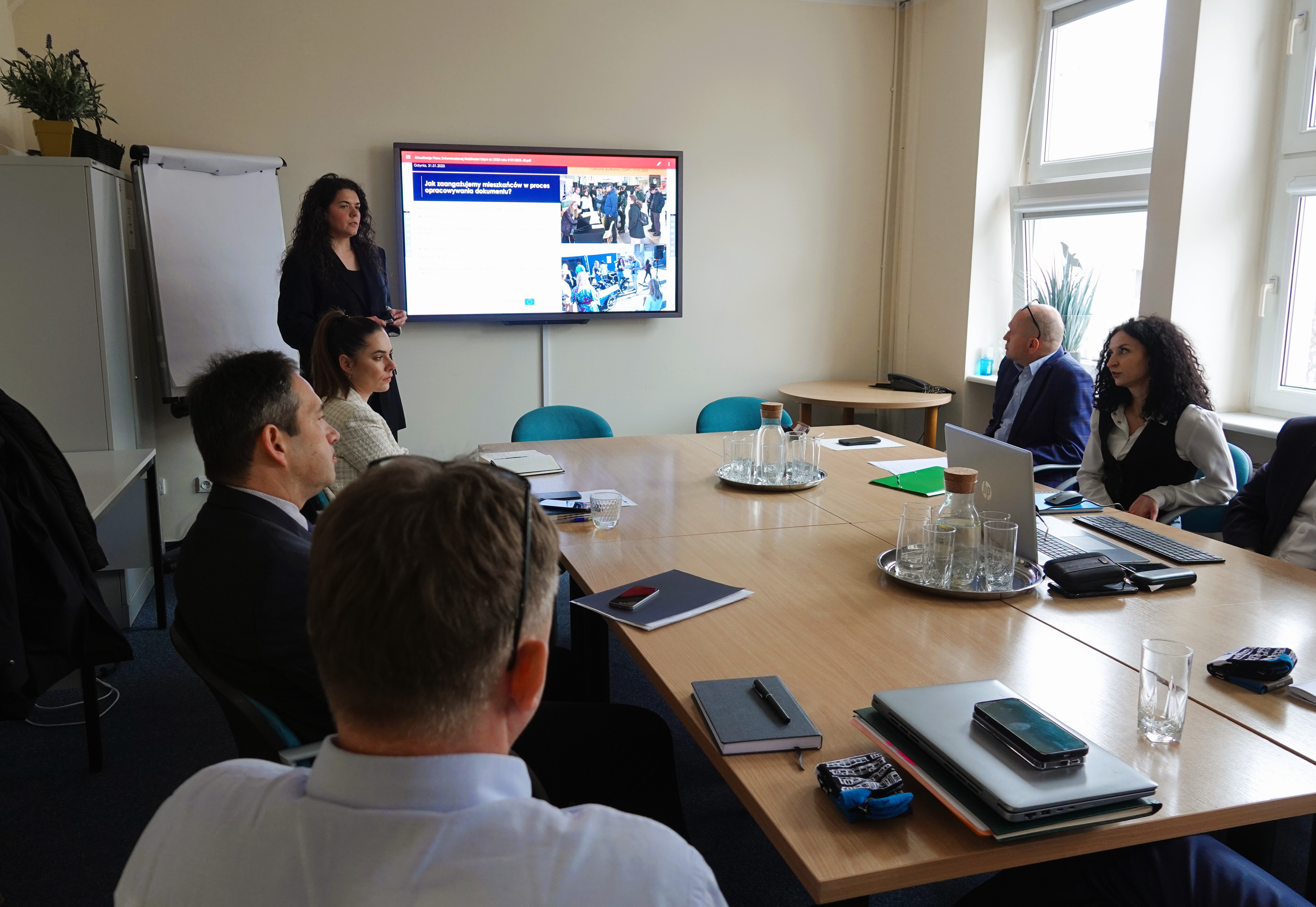
Gdynia is part of the SUMPs for BSR project (Interreg Baltic Sea Region), which supports small and mid-sized cities in creating Sustainable Urban Mobility Plans that promote walking, cycling and low-emission travel through practical tools, data collection and pilot activities.
One of the project’s pilot activities is a combined campaign and data collection initiative to address gaps in youth mobility data and test innovative tools for monitoring walking and cycling. The pilot focuses on upper secondary school students, a group often underrepresented in urban mobility planning. It aims to develop approaches to pedestrian and cyclist counting using vision systems and machine learning.
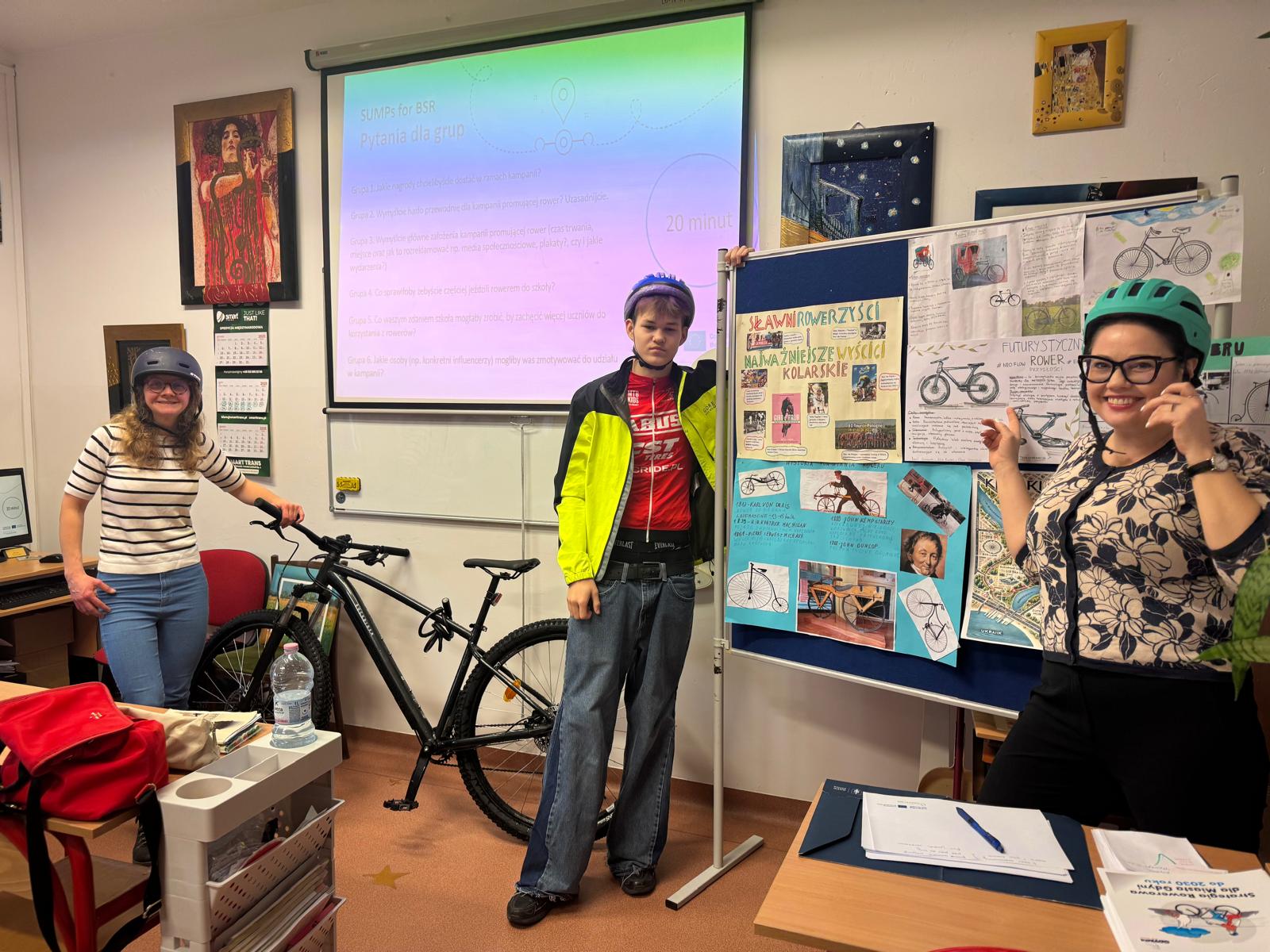
On the photo: Student workshop at a Gdynia secondary school. © City of Gdynia
The campaign, titled “Jak szkoła to dwa koła” (“If school, then two wheels”), will be implemented in autumn 2025 across 17 schools. It was co-designed with students through a series of workshops and a survey with 1371 participants. Students contributed ideas for the campaign name, visual style, slogans, rewards, communication channels and events. The initiative includes a cycling challenge via the “Active cities” app, school-based activities, contests, influencer collaboration, and weekly cycling breakfasts for active participants.
To complement the campaign, the city is piloting a vision-based AI system in cooperation with YUNEX Poland. A smart camera has been installed at a major intersection in Gdynia to detect and count pedestrians and cyclists. The two-month pilot will help the city develop a local method for counting active mobility users using machine learning, and evaluate the potential of such systems for urban data collection.
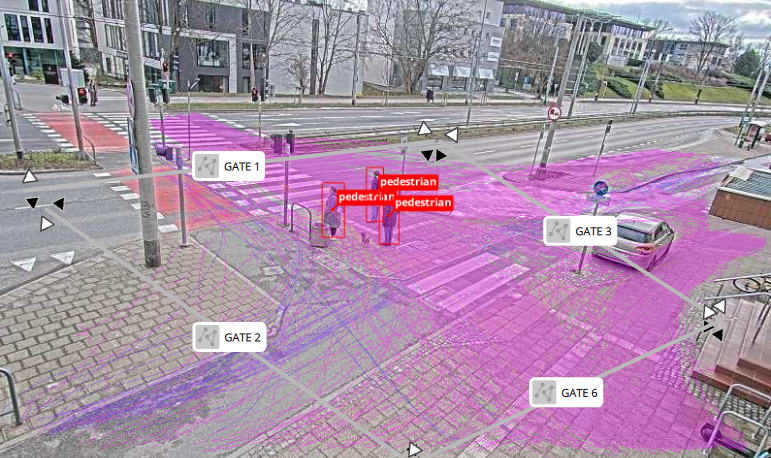
On the photo: AI camera installed at Zwycięstwa/Orłowska intersection. © City of Gdynia
The pilot also aims to fill a critical gap in transport data: the mobility preferences of high school students. The results will help validate automated counting tools and strengthen evidence-based planning. The city also collaborates with the University of Gdańsk and other partners to assess the accuracy and application of these advanced technologies.
The pilot campaign and AI testing feed directly into the ongoing SUMP update. Insights gathered will help shape new goals, policies and monitoring frameworks. Gdynia’s approach highlights the value of combining planning with experimentation and putting people – especially youth – at the center of mobility transformation.
Written by Justyna Suchanek, City of Gdynia