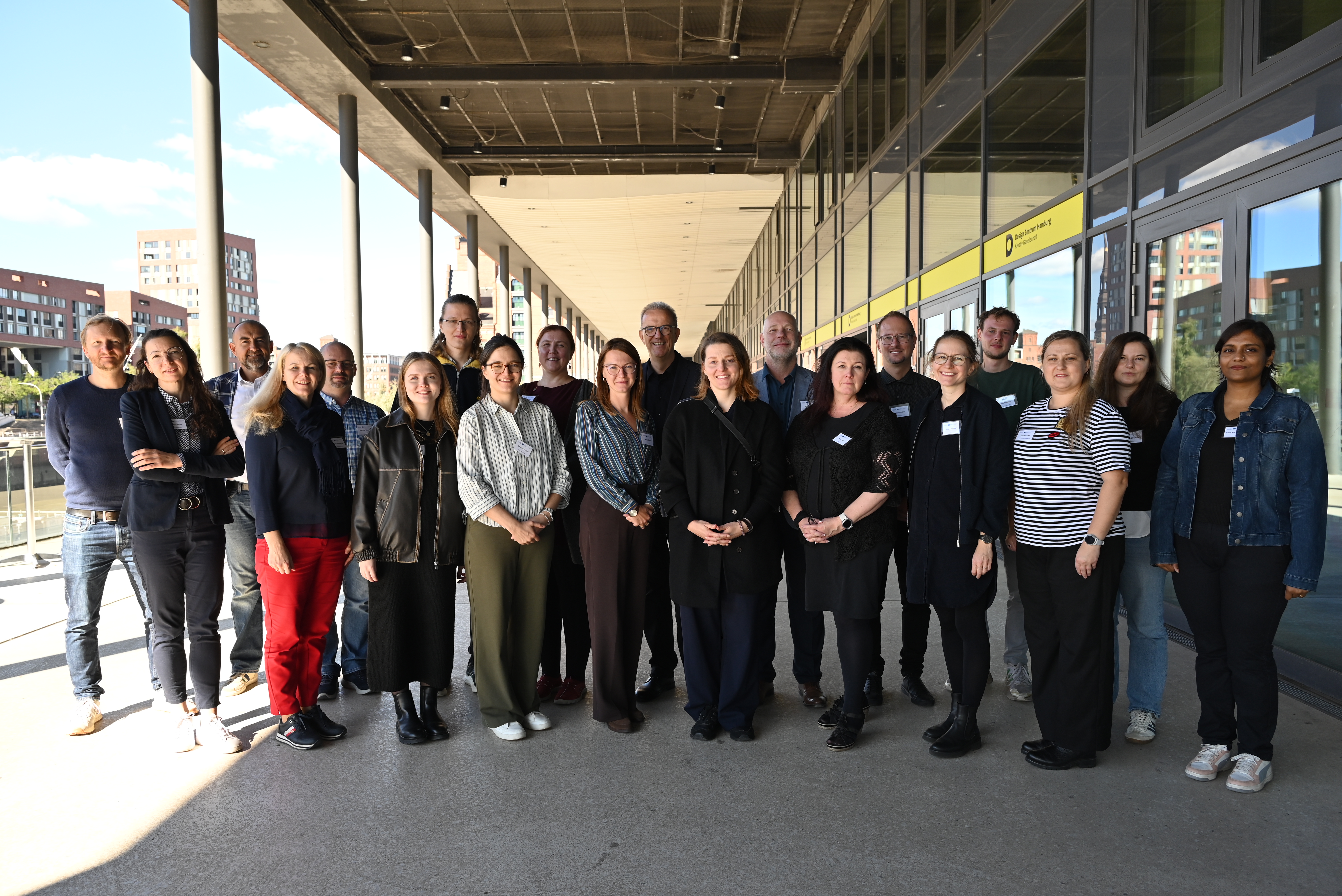
For the first time, the project consortium has gathered in Hamburg – the host city of the lead partner – Hafen City University and several other partners. The kick-off meeting, held on 24-25 September, has brought together the experts and practitioners representing regional energy agencies, municipalities, specialized networks, and academic institutions contributing to address the challenge of energy transition.
The central part of EnTRA platform is creating a unified, user-friendly Resource Hub tailored to the diverse needs of the Knowledge Community, further supported by an Institutional Ambassador Self-Audit Program and reinforced through the joint Policy Memorandum.
The projects integrated within the EnTRA Platform contribute their tools and results, incl.: optimized energy planning and management, comprehensive manuals and educational resources for understanding and engagement in energy transition, simulation tools for testing energy scenarios and enhancing the planning capabilities of authorities, and practical solution toolboxes. This way EnTRA attempts to establish a sustainable knowledge-sharing infrastructure that fosters cross-border exchange of best practices, lessons learned and innovative approaches, ensuring that tested solutions from one region or city can be adapted and applied in others, avoiding duplication of efforts and accelerating progress toward shared climate neutrality goals.
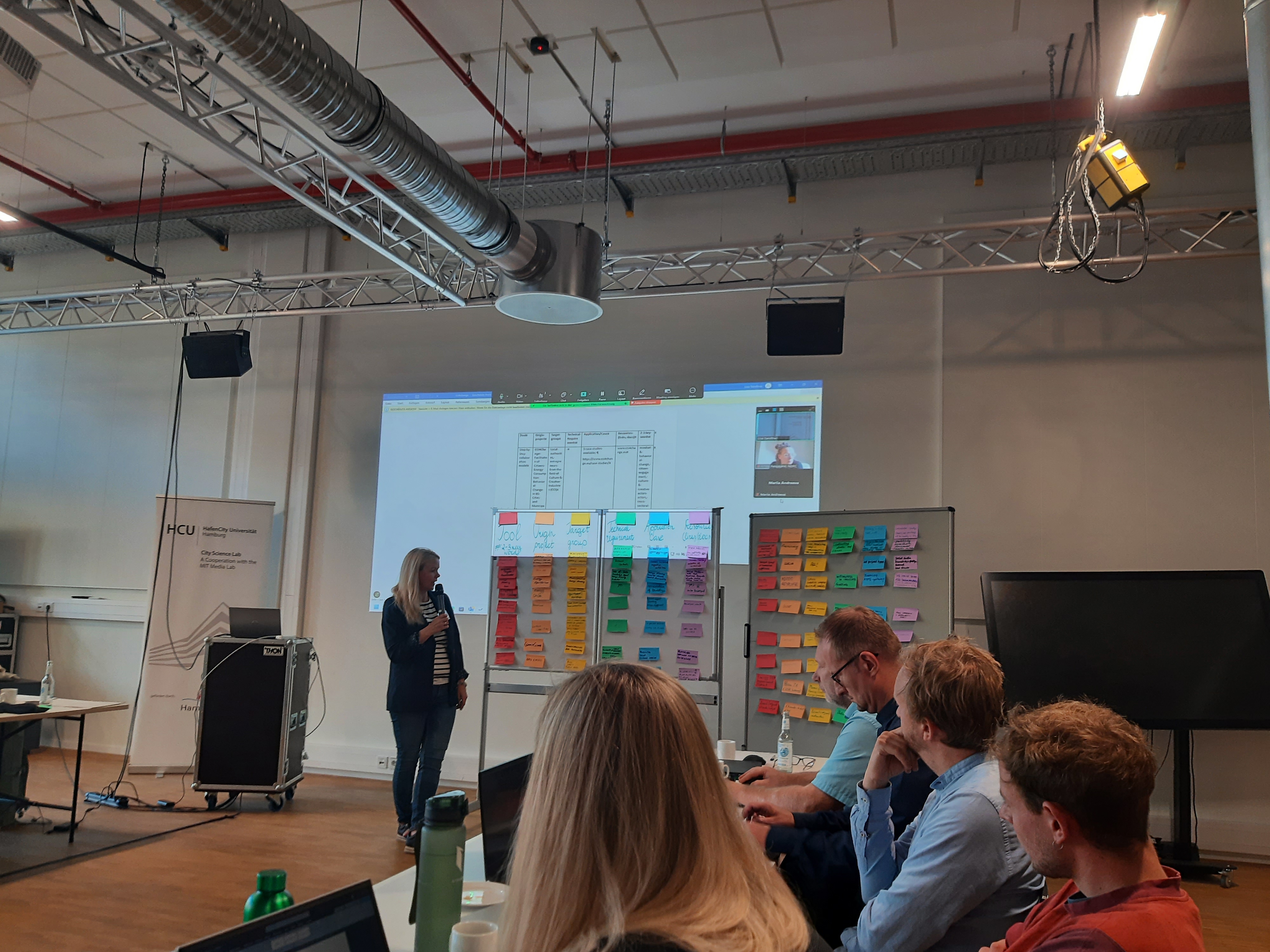
On the photo: Brainstorming during the EnTRA platform kick-off meeting. Photo by Olena Zinchuk.
The kick-off meeting commenced with welcoming words by the Lead Partner HCU and a representative of MA/JS of the Interreg BSR Programme. The strategic importance of the next years’ cooperation has been emphasized by both, while partners were encouraged to intensify exchange and discussions on their way to overcome barriers and challenges to successful adoption and multiplication of energy transition solutions. Which are more than plenty – as we learned while every organisation presented their contributing projects and results of those to be fed into prospective outputs of platform collaboration.
Extensive workshopping allowed to analyse those solutions from the perspective of various target groups, technical complexity, as well as adaptation and resources needed. In addition to this fruitful work, the consortium had an opportunity to learn about energy solutions in heritage protected buildings tested in the HCU science lab in the heart of Hamburg old town. These included cutting edge technologies for seamlessly integrated and managed heating systems, heat storages and solar panels adopted to the landscape requirements of historic rooftops.
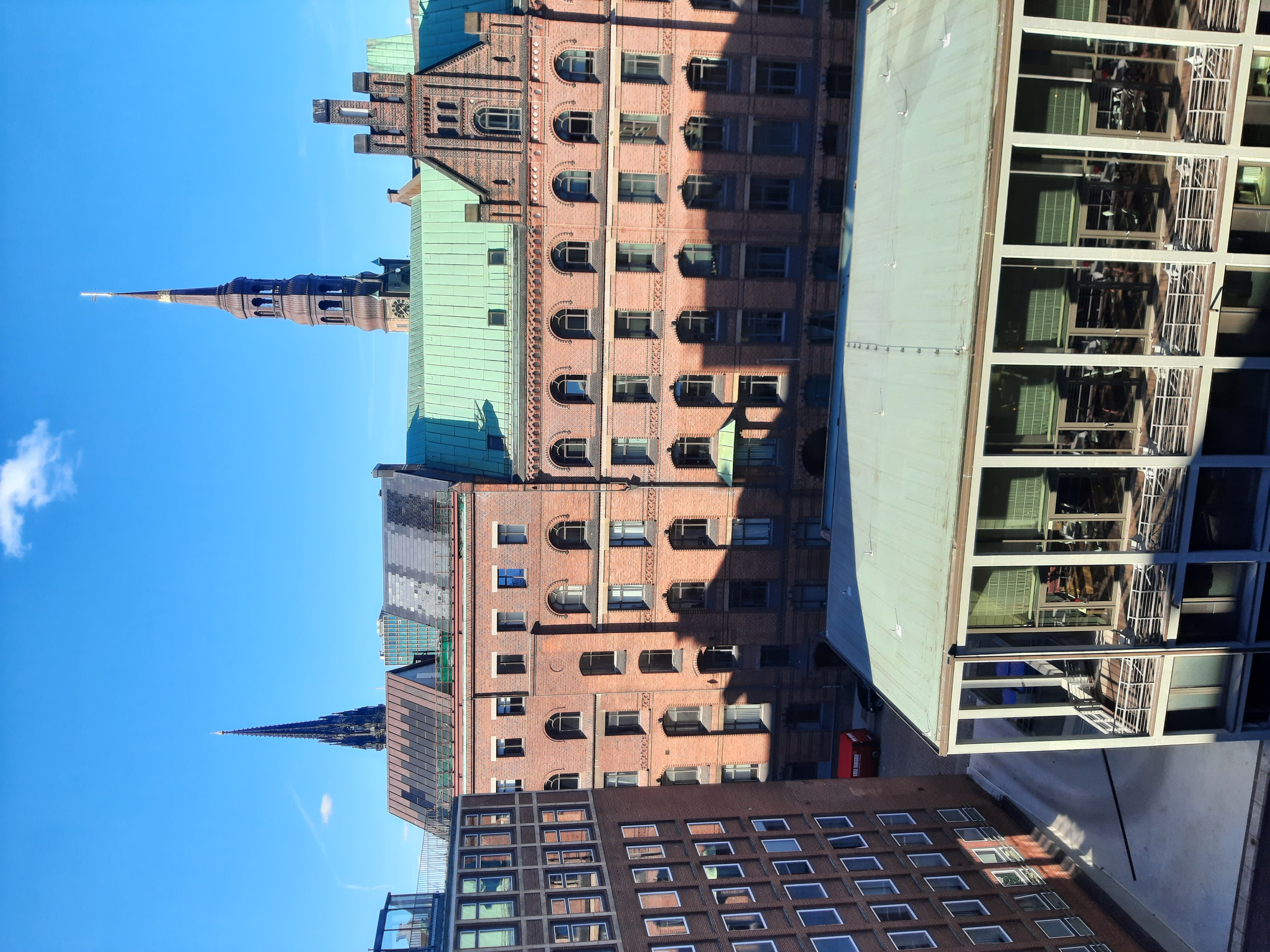
On the photo: Example of solar panels adopted to the landscape requirements of historic rooftops. Photo by Olena Zinchuk.