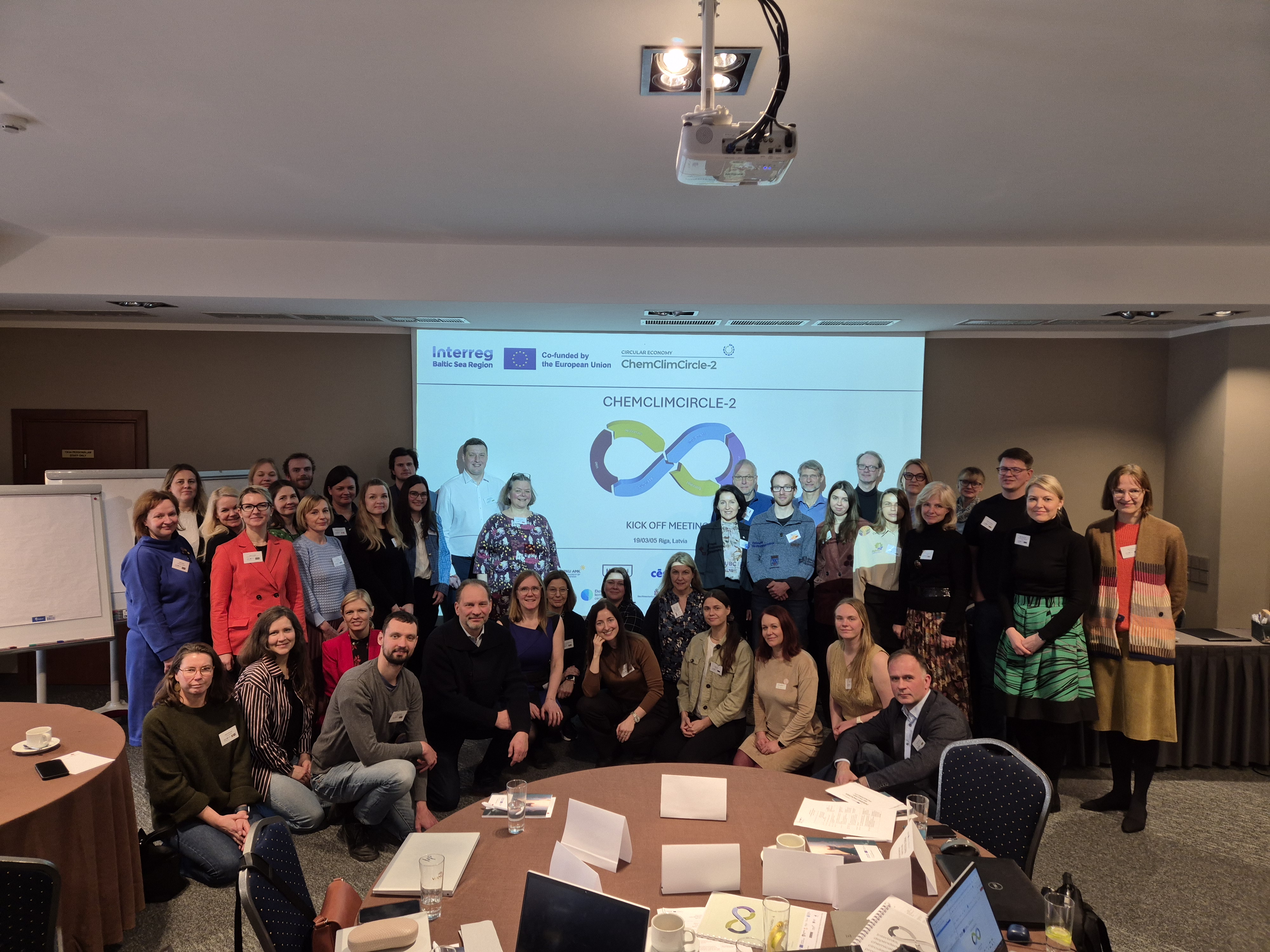
The path to a climate-neutral, circular and toxic-free future just gained momentum with the launch of ChemClimCircle-2 (CCC-2), a core project under the Interreg Baltic Sea Region Programme. On 19–21 March 2025, representatives from 22 partner organizations across the Baltic Sea region led by the Lithuanian Public Procurement Office gathered in Riga, Latvia, to kick off this three-year initiative. Project mission is to empower municipalities with innovative tools, approaches, and know-how for implementing Green Public Procurement. Over the course of the three-day meeting, the consortium engaged in detailed discussions on the planned activities for the project's first year of implementation.
From foundation to transformation
CCC-2 builds on the successful groundwork laid by its predecessor, ChemClimCircle-1, which equipped municipalities with training modules to apply circular procurement and by this, to use non-toxic and climate-neutral products. Now, CCC-2 is taking the next bold step integrating chemicals, climate, and circularity (the three “Cs”) into a holistic Green Public Procurement (GPP) framework through an extensive series of internationally harmonized piloting and testing rounds across eight countries.
Coordinated by the Lithuanian Public Procurement Office and firmly aligned with the European Green Deal, the project tackles the complex interconnections between environmental factors in public procurement: climate, circularity and chemicals. By doing so, it seeks to mainstream sustainable public procurement practices across a broad spectrum of sectors and public authorities.
Throughout the project, approximately 50 procurement use cases will be piloted across 10 municipalities and 3 regional authorities. These practical testbeds will trial the ChemClimCircle approach not only for procurement process innovation but also for measurable environmental impact.
“We aim to develop a comprehensive yet efficient monitoring concept for successful implementation of the ChemClimCircle criteria throughout the whole procurement process.”
— Kęstutis Kazulis, Lithuanian Public Procurement Office, Lead Partner of the project.
One of the project’s cornerstones is the development of an innovative monitoring and evaluation framework. This includes:
- A user-friendly methodology to assess environmental impact from ChemClimCircle procurements going beyond carbon emissions to include chemical safety and circular economy benefits.
- The ChemClimCircle Navigator: a digital platform offering step-by-step guidance for procurers and end-users on applying CCC criteria throughout the procurement cycle.
- A comprehensive learning and capacity-building campaign to deepen knowledge, empower experts dealing with public procurement, and foster peer learning among public authorities – especially in the eastern Baltic Sea Region.
- A report showcasing the most exemplary ChemClimCircle procurement cases, complemented by key lessons learned from the pilot activities to inspire replication and guide more sustainable procurement practices.
Strengthening sustainability from the ground up
Through targeted support and training, CCC-2 will help municipalities:
- Develop and test monitoring tools for tracking CCC integration in procurement.
- Evaluate the environmental benefits of sustainable choices beyond CO₂ metrics.
- Anchor the CCC approach in everyday procurement processes.
- Build local capacity to define and achieve their own sustainable procurement goals.
- Foster proactive dialogue with suppliers and stakeholders throughout the procurement chain.
To recognize progress, the project will also celebrate municipalities that successfully embed the CCC approach into their organizational strategies and procurement management.
An important role in the project is played by the UBC Sustainable Cities Commission, which will support the transfer of successful approaches and solutions to other municipalities in the region through a replication strategy, capacity-building activities and discussions at the policy round tables and international seminars. By sharing insights, solutions and best practices, CCC-2 aims to amplify its impact across the Baltic Sea Region and beyond.
In an era where public procurement is increasingly recognized as a powerful lever for sustainability, ChemClimCircle-2 offers local, regional and national authorities a concrete pathway toward cleaner, greener, and more circular solutions turning everyday purchases into climate action.